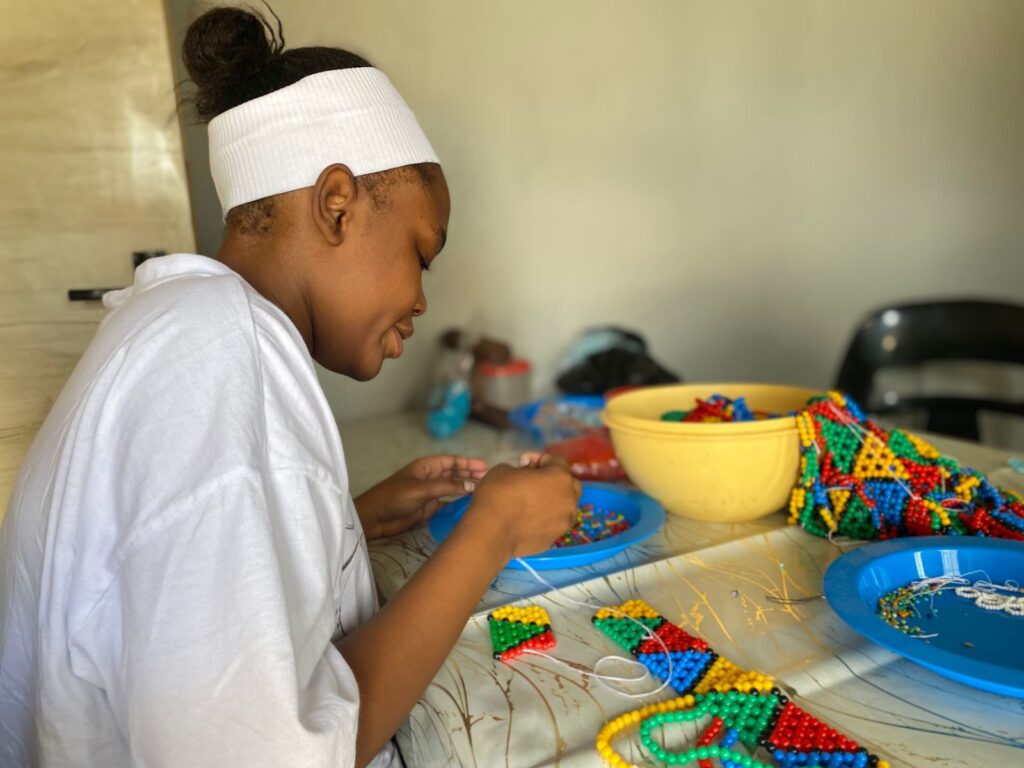
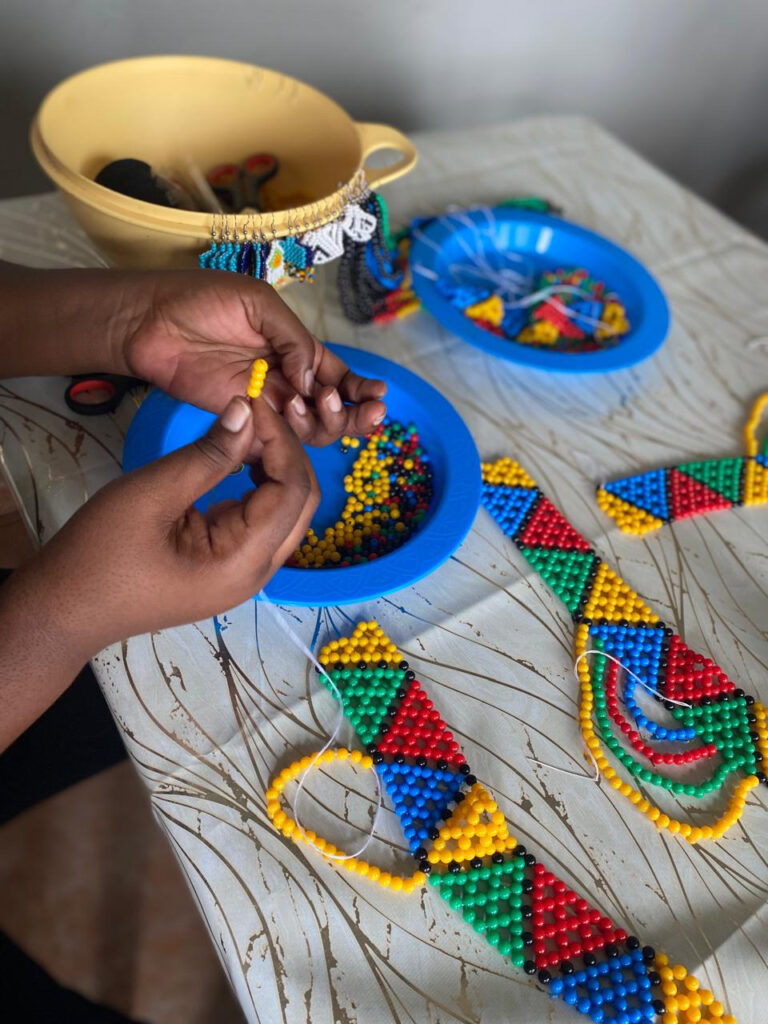
When we started making African jewellery at Voninga Foundation, we were working in a very small space. There was barely enough room, so we had to sit around a table together.
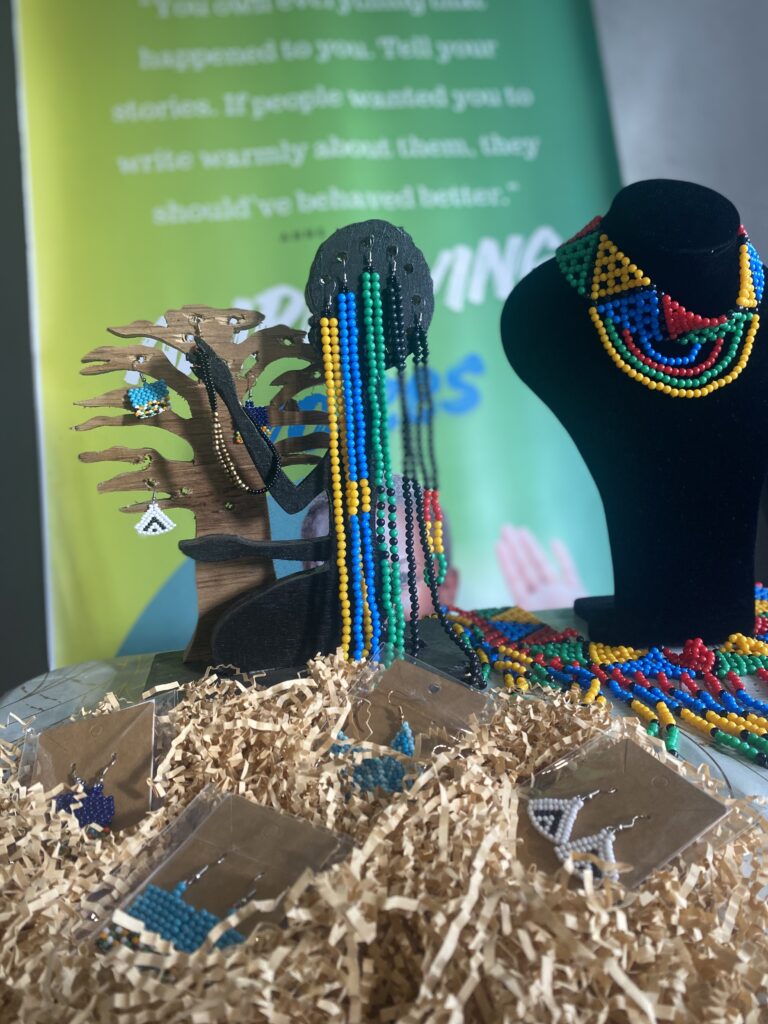
We came to learn a skill. We wanted to learn jewellery making so that we could create products, generate income and become more economically independent.
But something unexpected happened.
By the time we finished our sessions, we felt revived.
It was not part of the original plan. It happened because of the way we were positioned. We sat together. We could see one another. We could talk freely. We shared what was happening in our lives. We vented. We laughed. We comforted one another. Sometimes, we simply listened.
And then it hit us:
This is therapy in action.
Not because jewellery making itself was therapy, but because the process created a space for human connection.
We were talking to someone. We were sitting comfortably. We were looking into each other’s eyes. We were listening. We were being heard. For a moment, we were not carrying our problems alone.
And perhaps there is something we can learn from the way our forefathers and foremothers lived.
They created many opportunities to sit together. Around a fire. While eating. During gatherings. While working. While telling stories. While simply being together.
The circle was more than a physical arrangement. It created an opportunity for conversation, connection and belonging.
Today, we often have to deliberately create spaces for the things that communities once naturally provided.
We have therapy rooms. Support groups. Wellness programmes. Mental health campaigns.
But perhaps some of the principles were always there.
Sit together. Talk. Listen. Look at one another. Laugh. Share your burdens. Allow someone to hear you.
We cannot say with certainty that these traditions prevented depression or suicide, because history does not give us enough evidence to make that claim. But we can recognise that isolation can make emotional pain heavier, while connection can create opportunities for support.
Maybe our jewellery-making table reminded us of something our ancestors understood very well:
Healing does not always begin with an answer. Sometimes, it begins with sitting together.